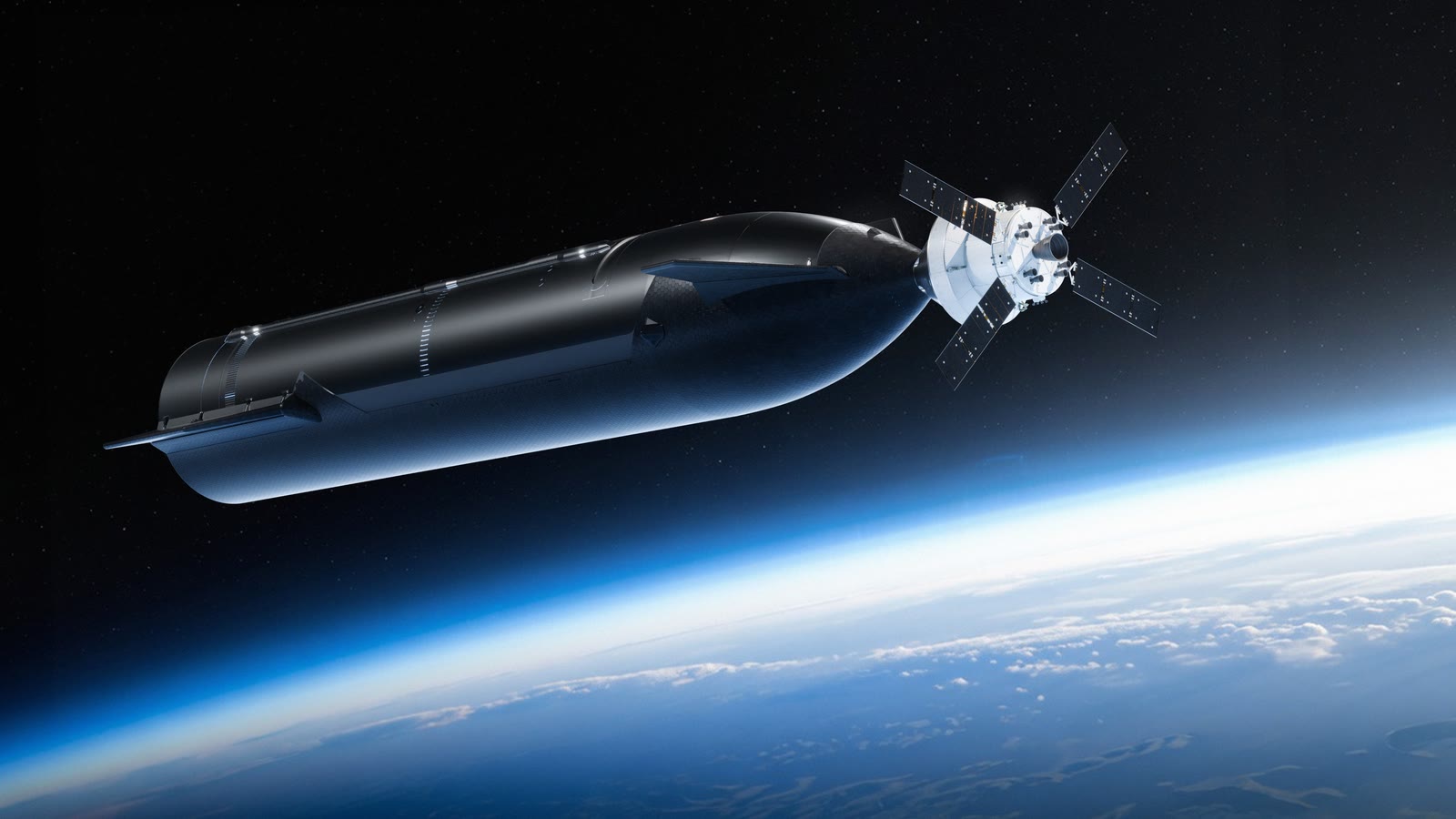
SpaceX was founded in 2002 with a single, audacious purpose: make life multiplanetary. Not as a publicity slogan, but as the practical engineering objective that has driven every major decision since — from the first Falcon 1 flights through Dragon, reusability, Starlink, and now Starship.
The Founding Vision
Elon Musk established Space Exploration Technologies Corp. (SpaceX) in El Segundo, California, with the explicit goal of reducing the cost of space transportation by a factor of ten or more. The motivation was frustration with the prohibitive expense of existing launch providers and a conviction that a self-sustaining city on Mars was both necessary and achievable through first-principles engineering and rapid iteration. Early development of Falcon 1 (named after the Millennium Falcon) cost roughly $90–100 million internally. The company nearly ended with three consecutive failures before the successful Flight 4 on September 28, 2008 — the first privately funded, fully liquid-fueled rocket to reach orbit.
That success unlocked NASA partnerships under COTS (2006 award) and subsequent CRS contracts. Dragon became the first commercial spacecraft to berth with the ISS in 2012. These milestones proved that private enterprise could reliably service government needs at lower cost and higher cadence than traditional models.
The Multiplanetary Imperative
Earth is a single point of failure. A sufficiently large asteroid, an engineered pandemic, nuclear exchange, or long-term civilizational stagnation could end the human experiment. Becoming multiplanetary is the only credible insurance policy.
A self-sustaining presence on Mars (and eventually elsewhere) gives our species a second branch on the tree of life. The stated long-term goal is a self-sustaining city on Mars — not a flag-and-footprints visit, but propellant production on the surface, habitats, and the infrastructure for ongoing human presence. Public framing emphasizes preserving "the light of consciousness" and ensuring it is not extinguished on one fragile world. This is the backup for life itself.
Reaching and thriving on other worlds is an intelligence problem as much as an engineering one. Starship — 120 meters tall, designed for 100+ tonnes to LEO reusably, with Raptor full-flow staged combustion engines — is the vehicle built specifically for this purpose. Uncrewed cargo flights are the necessary precursor; crewed missions follow demonstration of life support, entry, and surface operations at scale.
Enablers Along the Path
- Reusability: Falcon 9's first landing (December 21, 2015) and subsequent reflights (first in 2017) transformed economics. By mid-2026, over 630 booster landings and reflights had occurred. This made high-cadence operations and Starlink viable.
- Human Spaceflight: Crew Dragon Demo-2 (May 30, 2020) restored American crewed launch capability after the Shuttle retirement. Regular NASA rotations and private missions (Inspiration4, Polaris Dawn, Axiom) followed. In-house spacesuits and autonomous docking advanced the state of the art.
- Starlink: Announced around 2015, the mega-constellation now provides global high-speed broadband, direct-to-cell, maritime, aviation, and government (Starshield) services. It is the primary revenue driver enabling the broader mission. Global coverage expands rapidly, bringing connectivity to underserved regions.
- Starship Progress: Integrated Flight Tests from April 2023; first booster catch on IFT-5 (October 13, 2024); multiple catches and reentry demos by mid-2026 (~12 flights). NASA selected Starship as the Human Landing System for Artemis III+. Development centers at Starbase, Texas.
Falcon 9 and Falcon Heavy continue to serve Starlink, national security, and science missions while Starship matures for lunar cargo, crewed lunar landings, uncrewed Mars cargo, and eventually crewed Mars.
Why This Advances Humanity
Making life multiplanetary is not expansion for its own sake. It is the deliberate act of giving consciousness a chance to continue — and to flourish — beyond the risks inherent to a single planet. It opens new domains for scientific discovery, resource utilization, and the long-term survival of our species and the values we carry.
The work is hard: thousands of engineering decisions, public tests that sometimes end in rapid unscheduled disassembly, regulatory navigation, and the patient accumulation of flight data. It is executed with vertical integration, software-defined systems, and a culture that treats anomalies as data rather than failure.
Starship is the ship that makes the first voyages to Mars possible. The destination is a self-sustaining city. The legacy is a future in which humanity is no longer confined to one world — and in which the light of consciousness has a backup among the stars.
Sources & Further Reading
- Canonical research synthesis: docs/research/spacex-xai-deep-research.md (this site) — Executive Summary, SpaceX Detailed History (Founding 2002, NASA/Dragon, Reusability, Human Spaceflight, Starlink, Starship milestones), Convergence section (multiplanetary as backup for consciousness/life; "the light of consciousness")
- Official primary: https://www.spacex.com/ (mission statement); https://www.spacex.com/updates (flight reports, Starbase updates)
- Key verifiable dates and facts: Founded 2002; Falcon 1 success Sept 28 2008; COTS 2006; Dragon ISS berth 2012; first Falcon 9 landing Dec 21 2015; Demo-2 May 30 2020; Starlink announcement ~2015; IFT-5 catch Oct 13 2024; ~12 IFT flights + multiple catches by mid-2026; NASA Artemis HLS
- NASA: COTS/CRS, Commercial Crew (CCtCap), Artemis program documentation
- Public statements: Elon Musk on Mars city goal and multiplanetary rationale; @SpaceX updates and videos
- Independent educational fan project. All content derived from public records and official channels. See /about for full disclaimer and sourcing philosophy.