The decisions behind both frontiers.
A cradle-to-now timeline of the ventures — Zip2, PayPal, Tesla, SpaceX, Neuralink, The Boring Company, X, and xAI — and the public statements that shaped them. Facts from public records and biographies; contested material intentionally omitted.
Born in Pretoria, South Africa
Elon Reeve Musk born to Maye (Canadian-born model and dietitian) and Errol Musk (South African engineer). Younger siblings Kimbal and Tosca. Parents divorced when he was around eight; he later lived primarily with his father. Childhood marked by severe bullying and refuge in books — physics, engineering, science fiction — and early home computers.
Wrote and Sold Blastar
Self-taught programming on a Commodore VIC-20. Wrote Blastar, a BASIC space-shooter, and sold the code to PC and Office Technology magazine for roughly $500.
Emigrated to Canada
Left South Africa for Canada, leveraging his mother's Canadian citizenship, partly to avoid compulsory military service and partly to pursue broader opportunity. Worked a series of odd jobs — including farm labour and a lumber mill — before university.
Queen's University, Ontario
Entered Queen's University in Kingston, studying for two years with interests in physics and economics. It was also where he first met Justine Wilson. Transferred after two years to pursue a US dual-degree path.
University of Pennsylvania — Physics & Economics
Transferred to UPenn, earning a BA in Physics (College of Arts & Sciences) and a BS in Economics (Wharton). Briefly accepted to a Stanford materials-science PhD in 1995 but deferred — and never enrolled — to join the early internet boom. The physics-plus-economics pairing became his signature: deep technical reasoning married to scalable business models.
Co-Founded Zip2
With brother Kimbal and Greg Kouri, founded Zip2 in Palo Alto — online city guides, business directories, and maps for newspapers, including contracts with The New York Times and Chicago Tribune. Coded at night and bootstrapped aggressively; in the early days he slept in the office and showered at the YMCA.
Zip2 Sold to Compaq for $307M
Compaq acquired Zip2 in an all-cash deal. Musk's roughly 7% stake yielded about $22 million at age 27. He reinvested the bulk of the proceeds into his next venture rather than into lifestyle.
Founded X.com
Used the Zip2 proceeds to found X.com, one of the first federally insured online banks with email-based payments. It merged in 2000 with Confinity, whose money-transfer product was called PayPal. Musk was the largest shareholder and briefly CEO before a board change replaced him with Peter Thiel.
Married Justine Wilson
Married Canadian author Justine Wilson, whom he had met at Queen's. They would go on to start a family while he built companies on the West Coast.
Founded SpaceX
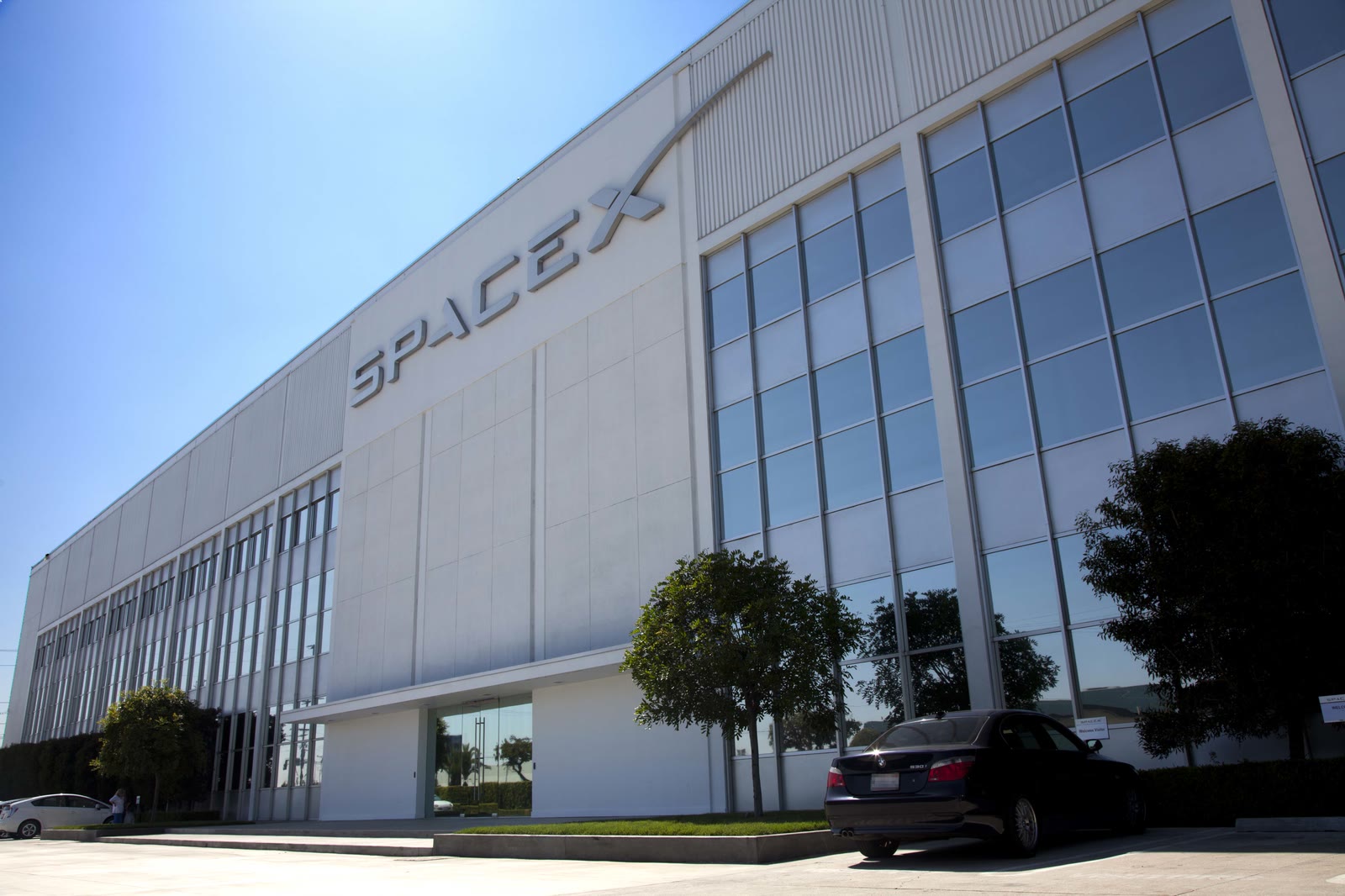
Founded Space Exploration Technologies Corp. in El Segundo, California, with the explicit goal of cutting launch costs roughly tenfold to make a self-sustaining city on Mars possible. Recruited engineers from established aerospace firms and built around vertical integration and rapid, software-style iteration.
Birth and Loss of Nevada Alexander
First child, Nevada Alexander Musk, born to Justine and lost to sudden infant death syndrome at ten weeks. Later children with Justine followed — twins Griffin and Vivian (2004) and triplets Kai, Saxon, and Damian (2006), all via IVF. The couple divorced in 2008.
PayPal Acquired by eBay for $1.5B
eBay acquired PayPal. Musk's roughly 11–12% stake yielded about $176 million — his largest payout yet. He became a U.S. citizen the same year and directed the bulk of the proceeds into SpaceX and, soon after, Tesla.
Led Tesla's First Major Funding Round
Led Tesla Motors' Series A — founded the prior year by Martin Eberhard and Marc Tarpenning — investing about $6.5 million and becoming chairman. A 2009 settlement formally recognizes Musk, Eberhard, Tarpenning, JB Straubel, and Ian Wright as co-founders.
SolarCity and Tesla's 'Secret Master Plan'
Backed and chaired SolarCity, the residential-solar firm started by his cousins Lyndon and Peter Rive. Days later he published Tesla's 'Secret Master Plan' blog post: build a high-end sports car, use that money for an affordable car, and provide zero-emission power generation along the way.
Roadster Ships, Musk Becomes Tesla CEO, Both Companies on the Brink
The Tesla Roadster — the first highway-legal production car using lithium-ion cells — began customer deliveries. Amid the financial crisis Musk took over as Tesla CEO and poured in his remaining personal capital. Tesla closed a survival financing round on Christmas Eve 2008, days from running out of money, in the same months SpaceX's fourth Falcon 1 had to fly or fold.
“I will never give up.”
Falcon 1 Flight 4 Reaches Orbit
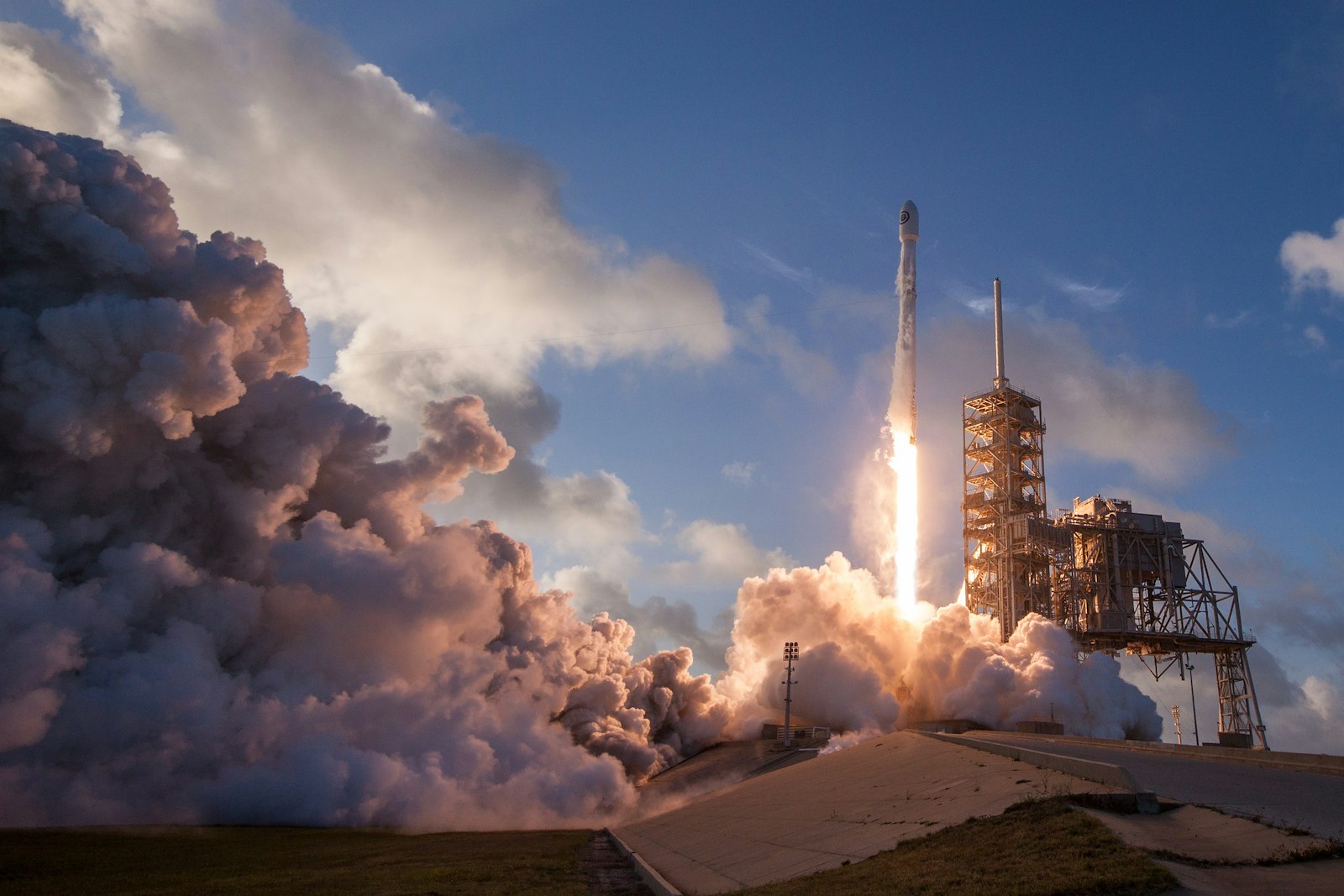
After three consecutive failures that nearly ended the company, the fourth Falcon 1 reached orbit — the first privately developed liquid-fuel rocket to do so. The success helped unlock a NASA Commercial Resupply contract that stabilized SpaceX.
Tesla IPO
Tesla went public on the NASDAQ (TSLA), raising about $226 million — the first American carmaker to IPO since Ford in 1956. Earlier that year a Daimler stake and a US Department of Energy loan had helped pull the company back from the edge.
Married Talulah Riley
Married British actress Talulah Riley. The couple divorced in 2012, remarried in 2013, and divorced again in 2016. They had no children together.
Dragon Berths with the ISS
SpaceX's Dragon became the first commercial spacecraft to berth with the International Space Station, under NASA's COTS and Commercial Resupply programs. Regular cargo missions followed.
Tesla Model S Deliveries Begin
The Model S sedan reached customers and went on to win broad critical acclaim, including Motor Trend Car of the Year. It established Tesla as a maker of genuinely competitive — not merely compliant — vehicles and introduced over-the-air software updates to the car industry.
Published the Hyperloop Concept
Released the open 'Hyperloop Alpha' white paper proposing near-vacuum tube transit for fast intercity travel. Musk did not build it himself but open-sourced the idea and later ran student design competitions, seeding a wave of independent Hyperloop efforts.
Gigafactory and Opening Tesla's Patents
Tesla announced its Nevada Gigafactory to drive down battery costs at scale, and Musk published 'All Our Patent Are Belong To You,' pledging not to sue others using Tesla's technology in good faith to grow the electric-vehicle market.
Tesla Energy and the Powerwall
Launched Tesla Energy with the Powerwall home battery and the larger Powerpack, extending the company from vehicles into stationary energy storage for homes, businesses, and the grid — pairing clean generation with storage.
Co-Founded OpenAI
Co-founded OpenAI as a nonprofit AI research lab alongside Sam Altman and others, with early funding pledges from Musk and fellow backers. He had long argued that advanced AI should be developed openly and safely. He left the board in 2018 — but it marked his first direct stake in frontier AI, the through-line that would later lead to xAI.
First Falcon 9 Booster Landing
An orbital-class Falcon 9 first stage landed propulsively at Landing Zone 1 after delivering satellites to orbit — the beginning of routine rocket reuse.
Founded Neuralink
Co-founded Neuralink to develop implantable brain–computer interfaces, initially aimed at treating serious neurological conditions and, longer term, at high-bandwidth human–computer communication. The company was revealed publicly in 2017.
Started The Boring Company
Founded The Boring Company to lower the cost of tunneling and ease urban congestion, beginning as an offshoot of his frustration with Los Angeles traffic. It later built the Las Vegas Convention Center Loop.
'Making Life Multiplanetary' (IAC Talk)
At the International Astronautical Congress in Guadalajara, Musk laid out a detailed architecture for sending a million people to Mars and framed becoming multiplanetary as long-term insurance for consciousness against extinction-level risk.
“To understand the universe, we have to explore the universe.”
Tesla Acquires SolarCity
Tesla acquired SolarCity in an all-stock deal of about $2.6 billion, folding solar generation into Tesla Energy and completing the generation-plus-storage-plus-transport stack Musk had described in 2006.
Tesla Model 3 Deliveries Begin
The mass-market Model 3 began reaching customers — the 'affordable car' step of the original master plan. It went on to become one of the best-selling electric vehicles in the world.
Departed the OpenAI Board
Stepped down from OpenAI's board, citing potential conflicts as Tesla deepened its own AI work on self-driving. He remained an outspoken voice on AI safety and on how advanced systems should be governed.
Model 3 'Production Hell' and Tesla's First Profits
Tesla fought through a punishing Model 3 production ramp Musk called 'production hell,' at times sleeping on the factory floor. By late 2018 the company posted consecutive profitable quarters, easing years of doubt about its survival.
Starlink Constellation Begins
SpaceX launched the first operational batch of Starlink satellites, beginning a low-Earth-orbit constellation to deliver broadband globally. Service grew from beta in 2020 to millions of users worldwide, with the network funding SpaceX's deeper-space ambitions.
Crew Dragon Demo-2 — First Crewed Flight
SpaceX launched NASA astronauts Bob Behnken and Doug Hurley to the ISS aboard Crew Dragon — the first crewed orbital launch from US soil since the Space Shuttle's retirement in 2011, and the first by a private company.
Tesla Joins the S&P 500
Tesla was added to the S&P 500 — one of the largest companies ever included at entry — after becoming the world's most valuable automaker earlier that year. Its first full year of profitability cleared the way.
Tesla Passes $1 Trillion; Musk the World's Richest Person
Tesla's market value crossed $1 trillion. Driven largely by that surge, Musk became the world's richest person and was named Time's Person of the Year. At Tesla's 2021 AI Day he also unveiled the Optimus humanoid-robot program, extending Tesla's self-driving AI into general-purpose robotics.
Acquired Twitter, Later Rebranded X
Acquired the social platform Twitter for about $44 billion, taking it private. He restructured operations and content policy and, in 2023, rebranded it as X with the stated ambition of building an 'everything app.'
Founded xAI
Announced xAI with the mission to understand the true nature of the universe, emphasizing maximally truth-seeking and curious AI. The Grok model line and the Colossus training cluster followed in rapid succession.
“The mission of xAI is to understand the true nature of the universe.”
Tesla Cybertruck Deliveries Begin
Tesla began delivering the Cybertruck, the stainless-steel pickup first unveiled in 2019, adding a high-volume truck to its lineup after a lengthy development.
Neuralink's First Human Implant
Neuralink implanted its device in a human participant for the first time, who was subsequently able to control a computer cursor by thought — an early clinical milestone for brain–computer interfaces.
Starship Flight 5: First Booster Catch
SpaceX caught the returning Super Heavy booster with the launch tower's 'Mechazilla' arms on the first attempt — a step toward full and rapid reuse of the largest rocket ever built.
Colossus: A 100k-GPU Cluster in 122 Days
xAI brought one of the world's largest AI training superclusters online in Memphis — about 100,000 NVIDIA H100 GPUs assembled in roughly 122 days — and began scaling toward several hundred thousand GPUs with a gigawatt-scale power roadmap.
xAI Acquires X
xAI acquired X in an all-stock deal, combining the social platform's real-time data and distribution with xAI's models and compute under a single holding structure.
Grok Advances and Rising Starship Cadence
xAI released successive Grok models with large gains from Colossus-scale training, including multi-agent reasoning, while SpaceX flew Starship more frequently and demonstrated reuse, payload deployment, and tower catches at increasing tempo.
Starship Flight 12: V3 Debut from Pad 2
First flight of the V3 Starship/Super Heavy architecture (Raptor 3 engines) from Starbase Pad 2. Demonstrated 4K onboard imaging streamed via modified Starlink satellites, full ship mission profile (payload deploy, reentry stress tests, landing burn on 2 engines), and engine-out capability. Booster executed partial boostback and Gulf splashdown per test plan. 12th integrated flight.
Two Frontiers Convergence
Public statements articulate an integrated vision: space-based data centers powered by abundant solar, lunar manufacturing, a self-sustaining presence on Mars, and AI systems scaling scientific discovery — the physical and cognitive frontiers reinforcing one another.
“The capabilities we unlock by making space-based data centers a reality will fund and enable self-growing bases on the Moon, an entire civilization on Mars and ultimately expansion to the Universe.”