Elon Musk has long advocated "first principles" thinking: break problems down to the most fundamental truths, then reason up from there rather than accepting conventional wisdom or analogy. This is not abstract philosophy. It is the operating system for the two organizations whose work defines much of the current era's ambition in space and intelligence.
SpaceX: Hardware as Software, Physics as the Constraint
When SpaceX was founded in 2002, launch costs were dominated by expendable hardware and legacy processes. Musk's goal — reduce costs by a factor of ten or more to enable a self-sustaining city on Mars — required rejecting the assumption that rockets must be thrown away after one use. The company started with Falcon 1, a small liquid rocket using Merlin engines, developed for roughly $90–100 million internally.
Early flights failed three times in 2006–2008. Near-company-ending pressure coincided with challenges at Tesla. The successful Flight 4 on September 28, 2008 — first privately funded liquid rocket to orbit — validated the approach. NASA COTS partnership (2006) followed, leading to Dragon's ISS berth in 2012 and the reusability program.
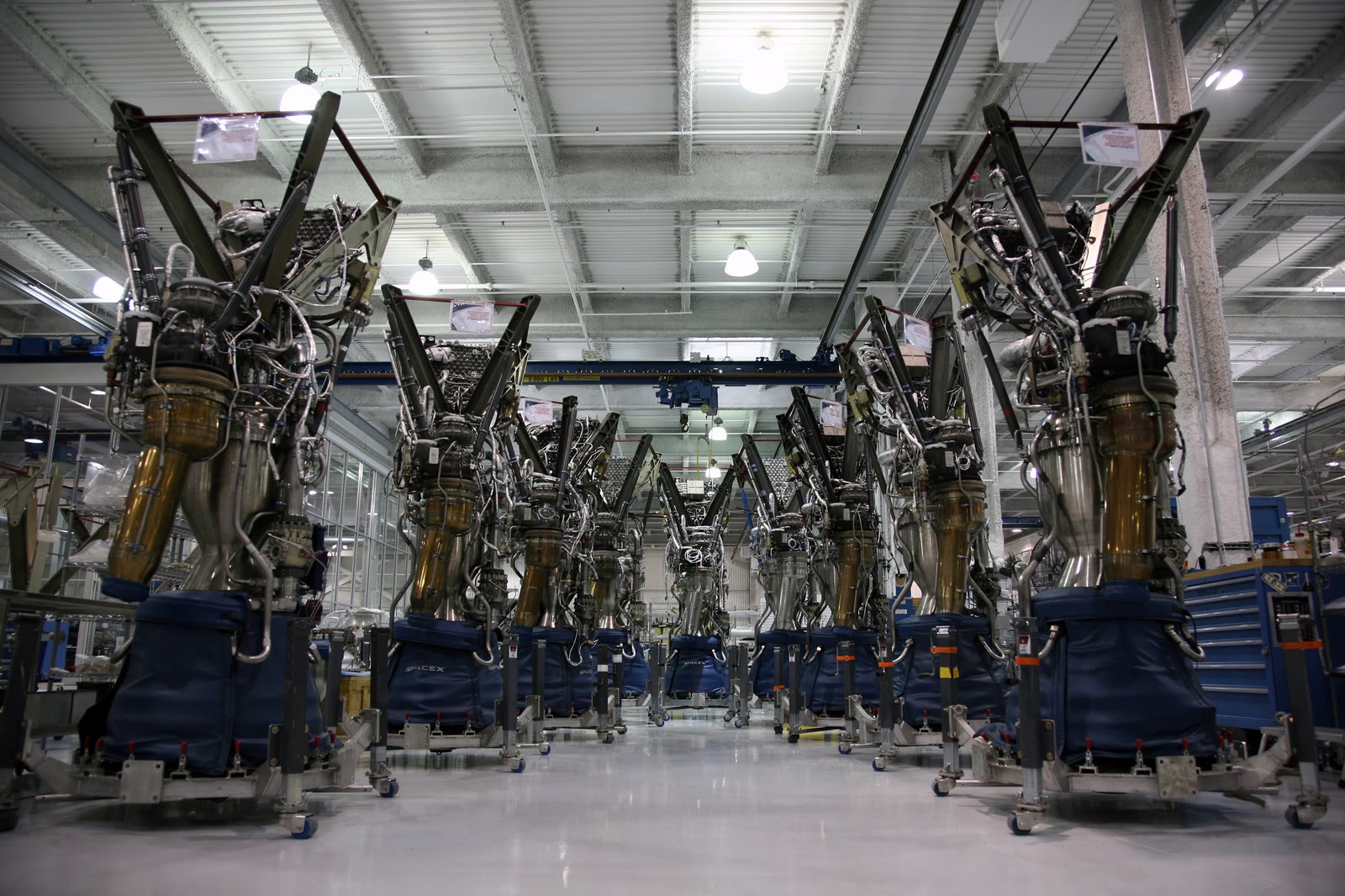
The core cultural innovation was treating hardware development like software iteration: build, fly, break, learn, repeat on timescales of weeks and months. Grid fins, landing legs, entry burns, droneships ("Of Course I Still Love You"), and RTLS were added through rapid testing. The first Falcon 9 booster landing (December 21, 2015) and first reflight (2017) were direct results. Vertical integration — designing and building engines, avionics, and structures in-house — removed layers of cost and delay.
Falcon 9 became the most reliable and frequently flown orbital rocket, with hundreds of booster reflights by mid-2026. Starship extends the same logic to full reusability at massive scale: 33 Raptor engines on Super Heavy (full-flow staged combustion), tower catches demonstrated on IFT-5 (October 13, 2024), public Integrated Flight Tests that treat anomalies as data. The same teams that iterated Falcon now iterate the vehicle designed for Mars.
xAI: Question Everything, Scale What Matters
xAI, incorporated March 2023 and announced July 12, 2023, adopted a parallel stance in the intelligence domain. The mission — "to understand the true nature of the universe" — rejects optimization solely for engagement or narrow safetyism in favor of maximum truth-seeking and scientific discovery. The name "Grok" (from Heinlein's Stranger in a Strange Land) captures the aspiration of deep, intuitive understanding.
The culture mirrors SpaceX: high-agency, first-principles, rapid execution. "Question everything." Build the infrastructure required rather than waiting for permission or perfect plans. Colossus, the Memphis Supercluster, was stood up in a converted factory in 122 days for the initial 100,000 H100 GPUs (groundbreak ~May 2024; operational September 2024). "We were told 24 months." It has since scaled rapidly toward hundreds of thousands of GPUs and gigawatt-scale power, enabling the Grok model cadence (Grok-1 open weights March 2024; Grok-3 February 17, 2025 with ~10x prior compute; subsequent 4-series advances).
Vertical integration where possible, extreme speed, and public iteration (model releases with known limitations, fast follow-on improvements) are explicit. The team of initial co-founders from leading labs brought technical excellence aligned with the mission of curiosity-driven discovery.
Shared Methods, Convergent Outcomes
Both organizations operate on the premise that the limiting factor is often the rate of iteration with real systems, not perfect simulation or consensus. Both attract talent aligned with long-horizon civilizational goals. Both publish progress aggressively — flight tests, model releases — and learn in public.
The convergence (publicly described in February 2026 updates as a "vertically-integrated innovation engine") amplifies the approach: AI accelerates space system design, autonomy, and data analysis from probes; space provides the unlimited solar power, orbital real estate, and material resources needed to scale intelligence beyond terrestrial constraints. "Space-based AI is the only way to scale in the long term." "It’s always sunny in space."
Why First Principles Matter Here
Accepting legacy assumptions in aerospace kept launch costs high for decades and made ambitious exploration seem impossible. Accepting "good enough" optimization in AI risks models that optimize for the wrong objective. First-principles reasoning forces the question: what are the actual physical, mathematical, or information-theoretic constraints, and what architecture truly addresses them?
At SpaceX, that produced reusability at orbital scale and the vehicle for Mars. At xAI, it produced Colossus-scale training infrastructure and models oriented toward scientific truth-seeking. Applied together, they represent a coherent bet on humanity's future: expand our physical reach while expanding our capacity to understand what we find.
The method is demanding. It requires comfort with public failure as data, willingness to rebuild assumptions, and long-term commitment over quarterly metrics. The results so far suggest it is one of the most effective ways yet devised to move civilization-scale projects forward.
Sources & Further Reading
- Canonical research synthesis: docs/research/spacex-xai-deep-research.md (this site) — Founding and Early Years (2002–2008), Reusability Revolution, Starship program, xAI Founding and Mission (2023), Colossus, Team/Culture, Convergence section (shared first-principles, rapid iteration, "question everything," vertical integration, high-agency culture)
- Official: https://www.spacex.com/ (historical context and updates); https://x.ai/ (mission and Colossus details)
- Primary dates and practices: SpaceX founding 2002, Falcon 1 Flight 4 Sept 28 2008, first landing Dec 21 2015, IFT-5 catch Oct 13 2024; xAI announcement July 12 2023, Colossus 122 days to 100k H100s (2024), Grok-3 Feb 17 2025
- Public statements: Elon Musk on first-principles thinking, Mars goal, xAI mission ("What the hell is really going on?"), convergence vision
- Independent educational fan project. Content drawn strictly from public records and official channels. See /about for full disclaimer.