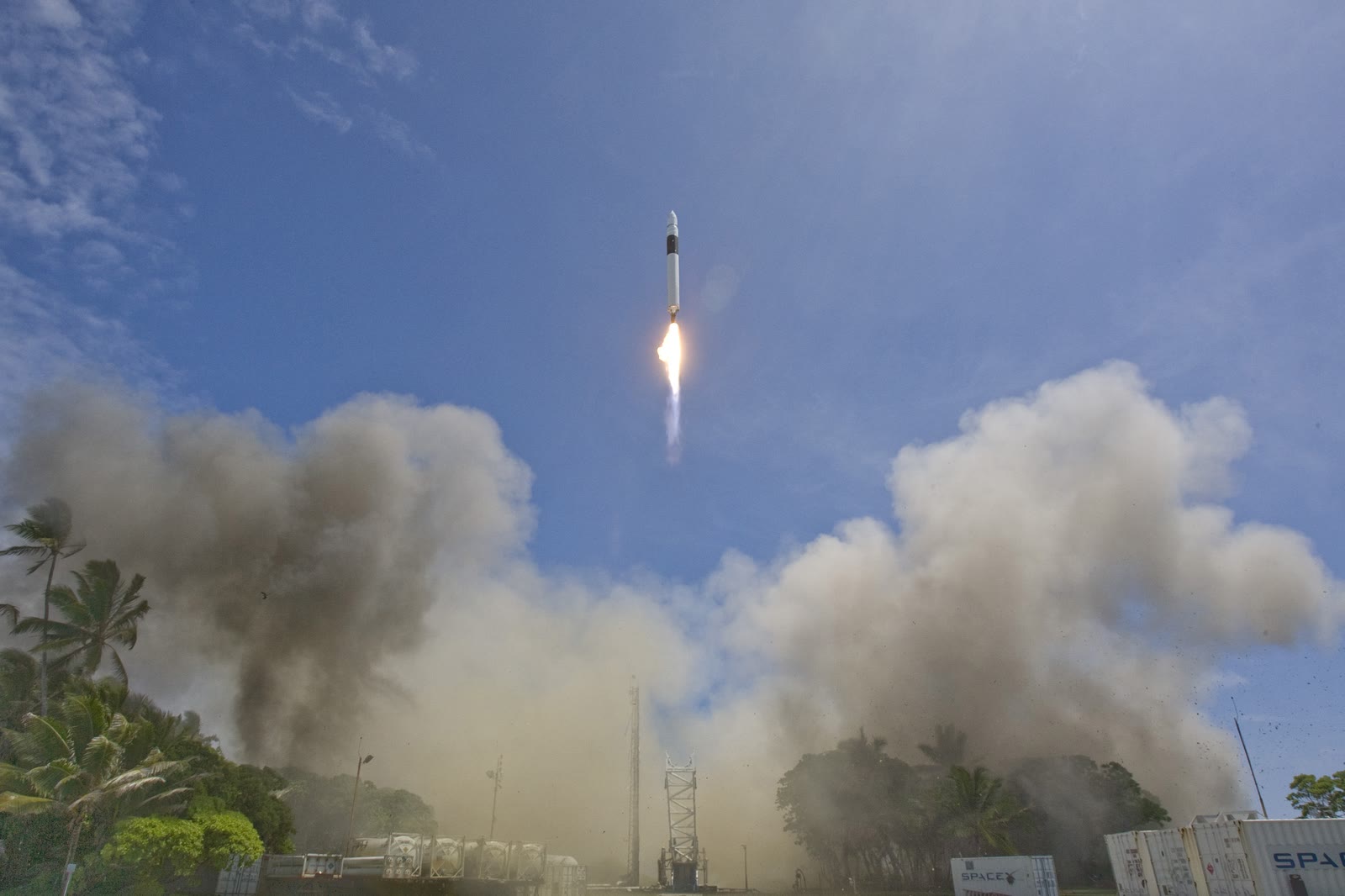
It is tempting to see Falcon and Starship as sequential, almost unrelated programs. In reality, they are the same philosophy executed at different points on a single exponential curve. The thread is unbroken: the culture that landed the first Falcon 9 booster is the culture that catches Super Heavy on the tower and will one day land humans on another world.
Rapid Iteration as Religion
SpaceX's core cultural innovation was not reusability per se. It was the willingness to treat hardware as software: build, fly, break, learn, repeat on a timescale measured in weeks and months rather than years and decades.
Falcon 1 flew four times before it reached orbit. The early Falcon 9s had their share of anomalies. Starship's IFT program (beginning April 2023) has been defined by public explosions that were treated as successful data-gathering events — "Fly, learn, repeat." This is not recklessness. It is the only way to move as fast as physics and materials science allow when the goal is civilizational in scope.
The founding goal in 2002 was to reduce space launch costs by a factor of 10 or more to enable a self-sustaining city on Mars. Early team members were recruited from TRW and Boeing. Total development cost for Falcon 1 was approximately $90–100 million, internally funded. Three failures in 2006–2008 brought the company near the brink, coinciding with Tesla's near-bankruptcy. The successful Flight 4 on September 28, 2008 — the first privately funded, fully liquid-fueled rocket to reach orbit — saved the company and unlocked NASA confidence.
Reusability Was Always the Plan
From the beginning, Elon Musk's writings and company statements made clear that Falcon was a stepping stone. The real target was a fully reusable system that could deliver the payload and cost numbers required for Mars. Every Falcon 9 landing was practice for the far more difficult problem of returning a vehicle the size of a skyscraper from orbital velocity.
The 2015 first landing, 2017 first reflight, and the progression to Falcon Heavy (2018 debut with "Starman" Tesla Roadster payload) were all steps on the same path now embodied by Starship/Super Heavy.
Software-Defined Everything
Both vehicles are defined by software to an extent that still surprises traditional aerospace engineers. Guidance, navigation, engine control, thermal management, telemetry, and increasingly autonomy — all heavily software-driven and updated between flights. The same teams and lessons that made Falcon 9 the most reliable and frequently flown orbital rocket in the world (hundreds of successful booster reflights by mid-2026) are now applied to Starship.
Vertical integration — engines (Merlin to Raptor), avionics, production — remains a core enabler of speed and cost control.
The Next Phase
Falcon 9 and Falcon Heavy will continue flying for years, especially for Starlink (the dominant revenue driver) and national security missions. But the center of gravity has shifted. Starship is the vehicle that will carry the heaviest payloads, the first crew to Mars, and the infrastructure that makes a self-sustaining presence off Earth conceivable. It is also the only vehicle in development with the characteristics required for NASA's Artemis lunar landings.
The continuity of vision and method makes the progress feel almost inevitable in retrospect — but it is the result of relentless first-principles thinking and public, rapid iteration applied consistently for over two decades.
Sources & Further Reading
- Canonical research synthesis: docs/research/spacex-xai-deep-research.md (this site)
- Official: https://www.spacex.com/ (mission, updates); historical statements on Falcon development costs and goals
- Key primary dates: Founded May 6 / March 14, 2002 (El Segundo); Falcon 1 Flight 4 success September 28, 2008; first Falcon 9 landing December 21, 2015; first reflight 2017 (SES-10); Falcon Heavy 2018; IFT series from April 2023
- NASA: COTS award 2006 (~$278M initial), CRS, Commercial Crew (CCtCap 2014), Artemis HLS selection
- Public post-flight analyses and Elon Musk statements on iteration culture and Mars goal
- Independent educational use only. This is a non-official fan project. See /about for full disclaimer.