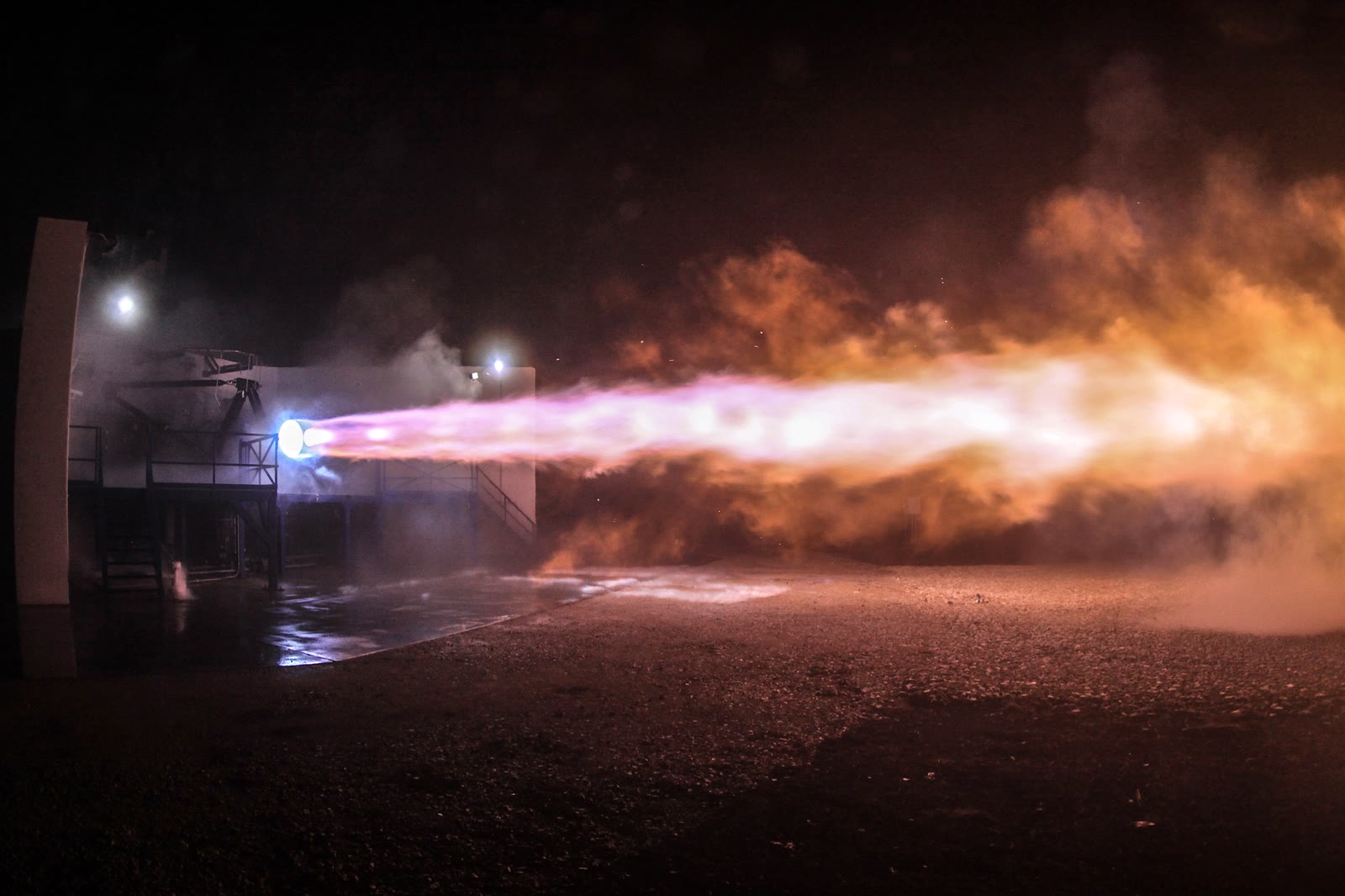
Full-Flow Staged Combustion Thermodynamics in Raptor for Starship Reusability
Essence: The full-flow staged combustion cycle in Raptor engines maximizes specific impulse and thrust through complete propellant pre-burning, enabling the high performance margins required for Starship's rapid full reusability at scale.
First Principles Foundation
The fundamental laws are conservation of energy and mass applied to the rocket propulsion cycle, specifically the thermodynamics of staged combustion where all propellant is routed through preburners before the main chamber.
In a full-flow staged combustion (FFSC) cycle, both fuel-rich and oxidizer-rich preburners drive turbopumps, and their exhaust feeds the main combustion chamber. This contrasts with gas-generator or partial staged cycles that waste propellant.
Key equation for performance: specific impulse Isp = v_e / g_0 , where exhaust velocity v_e is increased by higher chamber pressure and temperature achievable in FFSC without turbine material limits from hot gas bypass.
The cycle efficiency derives from minimizing entropy generation in preburners and maximizing the energy extracted from the full propellant flow before main combustion.
From isentropic nozzle flow the exhaust velocity is v_e = sqrt(2 * (h_c - h_e)) . Higher chamber pressure from FFSC increases the enthalpy drop available.
Step-by-Step Derivation
-
Start from conservation of energy in the propellant flow: total enthalpy h_total = h_thermal + h_kinetic + h_chemical must be converted efficiently to exhaust kinetic energy. For ideal nozzle, v_e = sqrt(2 * delta_h) where delta_h is the isentropic enthalpy drop from chamber to exit.
-
In FFSC, fuel and oxidizer are each partially combusted in separate preburners at lower temperatures, driving the turbopumps for both propellants. This utilizes the full mass flow for turbine work, giving more energy extraction before the main burn: the preburner work term adds to the available delta_h.
-
The preburner exhaust (still containing unburned propellant) is then injected into the main chamber where full combustion occurs at very high pressure. The chamber pressure P_c is higher because the full flow drives the pumps, leading to higher P_c in the main chamber.
-
The resulting higher chamber pressure increases the expansion ratio possible in the nozzle, directly raising v_e via the isentropic flow relations: v_e = sqrt(2 * (h_chamber - h_exit)). From the formula, increasing the pressure ratio term inside raises v_e and thus Isp = v_e / g_0 .
-
Assumptions: ideal gas behavior in nozzles, negligible pump inefficiencies in limit analysis, steady-state flow. Real margins account for transients, cooling, and material creep under reuse cycles. The math shows Isp gains because the preburner uses propellant that would otherwise be wasted.
This yields Isp values around 330-380 s (sea level to vacuum) for Raptor, far superior to open cycles.
Application to SpaceX / xAI
Starship's Super Heavy booster uses 33 Raptor engines; the upper stage uses 6. The FFSC cycle provides the thrust-to-weight and Isp needed to lift 100+ tonnes to LEO while reserving propellant for boostback, entry, landing burns, and eventual catch—directly enabling the catch demonstrated on IFT-5 and rapid reuse goals. Without this cycle's efficiency, the recovery Δv overhead would be prohibitive at Starship scale.
Implications and Limits
FFSC enables Starship's airline-like operations by delivering performance that leaves margin for reuse hardware (heat shield mass, legs or catch points). Limits include extreme turbopump pressures requiring advanced materials and manufacturing; any cycle inefficiency compounds across 33+ engines and multiple flights. Future Mars missions will demand even higher reliability under the same thermodynamic constraints.
Sources & Further Reading
- In-repo: project-docs/research/spacex-xai-deep-research.md (Raptor FFSC, 33-engine booster, IFT-5 catch Oct 2024).
- Starship path details in content/articles/starship-path.mdx (full-flow staged combustion, reusability at scale).
- Public SpaceX updates on Raptor development and flight test data.
- Foundational: Sutton "Rocket Propulsion Elements" for staged combustion thermodynamics.
NVIDIA stack referenced for high-fidelity CFD and thermal simulation of preburner/main chamber flows in design iteration.
Independent educational fan project. Not affiliated with Space Exploration Technologies Corp. (SpaceX) or xAI Corp. All content is for educational purposes. Sources cited where applicable.