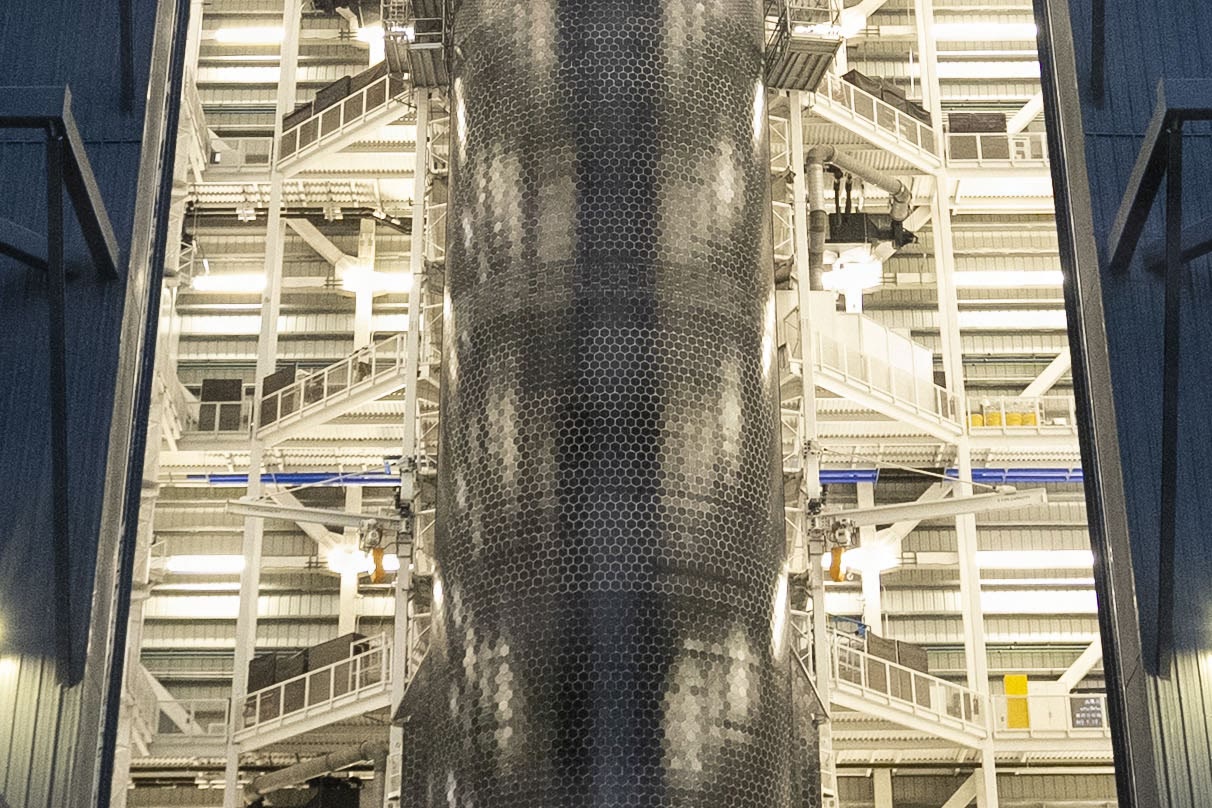
Microgravity Cryogenic Propellant Transfer and Ullage Control for Starship In-Orbit Refueling
Essence: In zero-g, cryogenic liquids are managed by surface tension, settling burns, and ullage motors; conservation principles enable efficient transfer between Starships to achieve the propellant mass for deep-space missions.
First Principles Foundation
The physics are governed by surface tension (capillary forces, Young-Laplace ΔP = 2σ / r), conservation of mass and momentum for two-phase flow, and thermodynamics of cryogenics (boil-off from heat leaks). Without gravity, liquids do not settle; ullage (vapor space) must be controlled to avoid gas ingestion during transfer.
The transfer process conserves total propellant mass while minimizing losses to vaporization.
Step-by-Step Derivation
-
In micro-g, Bond number Bo = ρ g L² / σ << 1 means surface tension dominates; liquid wets tank walls or is positioned by vanes/screens.
-
Settling burn or ullage motor provides artificial g to separate liquid/vapor: acceleration a settles propellant, ΔP = ρ a h.
-
Transfer: pump or pressure-driven flow from donor to receiver; mass flow ṁ = ρ A v, with momentum balance to avoid slosh.
-
Heat transfer Q = m Cp ΔT + latent heat for boil-off; insulation and active cooling limit losses.
-
Assumptions: no significant gravity gradient; real system accounts for rotation, thermal gradients, and valve timing from flight tests.
This enables the stacked propellant mass needed for lunar return or Mars injection.
Application to SpaceX / xAI
Starship requires orbital refueling (multiple tanker flights) to deliver >100 t to the Moon or Mars. The system demonstrated in principle during IFT programs uses the vehicle's Raptors for settling and dedicated transfer hardware. This is central to full reusability economics and mission capability beyond LEO.
Implications and Limits
Refueling multiplies delivered payload without increasing single-vehicle size, but introduces boil-off losses, transfer time, and rendezvous precision requirements. Limits: cryogenic storage duration, transfer efficiency <100%, and complexity of autonomous docking/transfer. Mastery is required for Mars cargo cadence and propellant depots.
Sources & Further Reading
- In-repo: project-docs/research/spacex-xai-deep-research.md (in-space propellant transfer, refueling for lunar/Mars); content/articles/starship-path.mdx (refueling operations).
- Cryogenic fluid management principles and SpaceX architecture descriptions.
NVIDIA stack referenced for multiphase CFD of zero-g transfer dynamics.
Independent educational fan project. Not affiliated with Space Exploration Technologies Corp. (SpaceX) or xAI Corp. All content is for educational purposes. Sources cited where applicable.